

Changing The Face of Time
What is time?
In the early days of einstein, the law of relativity, there was no space no time.
Yes. Time causes gravity. Gravity is not a force, it is an effect of spacetime curvature.
Space time curvatures have to do with polarities and spinning capabilities. It is an arching of rotational forces and movements that cause an element a field of transference.
What did Albert Einstein say about time?
One of the most influential physicists to have ever lived, Albert Einstein, shared this view, writing, "People like us who believe in physics know that the distinction between past, present, and future is only a stubbornly persistent illusion." In other words, time is an illusion
Why do astronauts age slower?
Astronauts age slowly because of time-dilation effects. Time appears to move slower near massive objects because the object's gravitational force bends space-time. This phenomenon is called as gravitational time dilation which means time moves slower as the gravity increases.
We move faster and we age faster.
Why Is time an illusion?
In the Special Theory of Relativity, Einstein determined that time is relative—in other words, the rate at which time passes depends on your frame of reference.
Time is the continued sequence of existence and events that occurs in an apparently irreversible succession from the past, through the present,
According to theoretical physicist Carlo Rovelli, time is an illusion: our naive perception of its flow doesn't correspond to physical reality. ... He posits that reality is just a complex network of events onto which we project sequences of past, present and future
Time is familiar to everyone, yet it's hard to define and understand. Science, philosophy, religion, and the arts have different definitions of time, but the system of measuring it is relatively consistent.
Clocks are based on seconds, minutes, and hours. While the basis for these units has changed throughout history, they trace their roots back to ancient Sumeria. The modern international unit of time, the second, is defined by the electronic transition of the cesium atom. But what, exactly, is time?
Physics equations work equally well whether time is moving forward into the future (positive time) or backward into the past (negative time.) However, time in the natural world has one direction, called the arrow of time. The question of why time is irreversible is one of the biggest unresolved questions in science.
One explanation is that the natural world follows the laws of thermodynamics. The second law of thermodynamics states that within a closed system, the entropy of the system remains constant or increases. If the universe is considered to be a closed system, its entropy (degree of disorder) can never decrease. In other words, the universe cannot return to exactly the same state in which it was at an earlier point. Time cannot move backward.
The human brain is equipped to track time. The suprachiasmatic nuclei of the brain is the region responsible for daily or circadian rhythms. But neurotransmitters and drugs affect time perceptions. Chemicals that excite neurons so they fire more quickly than normal speed up time, while decreased neuron firing slows down time perception. Basically, when time seems to speed up, the brain distinguishes more events within an interval. In this respect, time truly does seem to fly when one is having fun.
Time seems to slow down during emergencies or danger. Scientists at Baylor College of Medicine in Houston say the brain doesn't actually speed up, but the amygdala becomes more active. The amygdala is the region of the brain that makes memories. As more memories form, time seems drawn out.
The same phenomenon explains why older people seem to perceive time as moving faster than when they were younger. Psychologists believe the brain forms more memories of new experiences than that of familiar ones. Since fewer new memories are built later in life, time seems to pass more quickly.
What is time and perceived time?
In relationships we often take things for granted. We justify our own fears to buy us more time. Mind games, reassurance, and push people to an emotional level that either we give up and walk away, they walk away, or turmoil is so great we stay in chaos. We become emotionally confused. We all want safety, but we misguide ourselves to the idea of what safety really is. WE use our old knowledge of old wounds in new situations. We are often triggered and we limit our new experiences or impact our new experiences based on the old ones. Chaos is some type of order. It is what most people know to be their lives, their understanding.
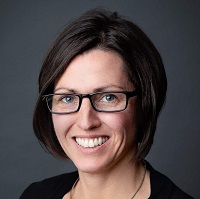
Dr. Stephanie J. Clark
Doctor of Chiropractic
Dr. Stephanie Clark is a multi-disciplinary practitioner specializing in the intersection of neurological health, structural alignment, and cellular wellness. With over two decades of experience, she integrates functional medicine, neuroscience, and traditional healing modalities to facilitate deep physical and cognitive recovery.
Professional Philosophy & Expertise
Dr. Clark’s clinical approach is rooted in the belief that the nervous system controls the function of every cell and tissue in the body. She specializes in using neurofeedback to reprogram brain function, restoring patients to optimal health after neurological setbacks. Her practice, Back to Life, provides comprehensive programs focusing on neurological, structural, and cellular communication.
Clinical Education & Certifications
- Doctor of Chiropractic: Palmer College of Chiropractic.
- Functional Health Science: Functional Medicine University
- Neuroscience: Intensive training at the Neuroscience Institute, Life University [User Data].
- Advanced Brain Specialties: Certified in LENS (Low Energy Neurofeedback System) and a trained Neurofeedback Practitioner and Trainer
- Manual & Movement Therapies:
- B.S. in Sports and Exercise Science and Movement Therapy (Minor in Psychology) from Stetson University
- Degree in Massage Therapy - NH Institure for Therapeutic Arts School of Massage Therapy
- Certified Cranial Sacral Therapist (The Upledger Institute)
- Certified LaStone Therapist
- Holistic Health: Herbology Degree from the Boston School of Herbal Studies
Speaking & Authorship
Dr. Clark is a recognized voice in regenerative and functional medicine:
Featured Speaker: Business Expert Forum at the Harvard Faculty Club (2016)
-
- Scientific Speaker: Frequent contributor to the Stem Cell and Regenerative Medicine Circuits for Boston BioLife
- Published Author: Author of the 2016 book, A.L.I.V.E. How To Transform Your Cells and Yourself From Disease To Wellness, which outlines her framework for cellular transformation and recovery
Through her unique combination of functional neurology and chiropractic care, Dr. Clark remains dedicated to helping patients transition from "dis-ease" to lasting wellness.
-
1.Video Introduction
-
2.Daily Action Step
-
3.Worksheet
-
4.Turn in Worksheet
-
5.Q & A
-
6.Aha Moment Completion
-
7.Health Coaching